 comparison
Is It Worth Renovating an Investment Apartment?
Table of Contents
- Is Renovating an Investment Apartment Worth It? The Real Numbers
- Investment Property Renovation Costs: Where the Money Goes
- Apartment Renovation Return on Investment: Reading the Numbers
- Best Renovations for Rental Properties: What Actually Moves the Needle
- Apartment Renovation Approvals: Strata, By-Laws and Common Property
- Tax Treatment for Australian Investment-Property Renovations
- Financing, Cash Flow and Borrowing for Apartment Renovations
- Frequently Asked Questions
Last Updated: October 12, 2026
Is Renovating an Investment Apartment Worth It? The Real Numbers
Is it worth renovating an investment apartment Sydney owners hold for the long term? Usually yes, but only when the renovation lifts rent or sale price by more than it costs. That gap, not the renovation itself, decides whether the project makes money. This guide from NRC Building Group sets out the decision model we use when owners ask us whether to renovate, sell as-is, or do nothing at all.
Start with the right question. Renovation is not a moral good; it is a capital decision. The owner's intended exit drives everything: a rental hold rewards durable, low-maintenance finishes, while a near-term sale rewards presentation that photographs well and survives a building inspection.
The Renovate vs Sell-As-Is Decision Model
Run the numbers before you call a builder. The model is simple: compare the after-renovation outcome against the as-is outcome, then subtract the full cost of works, holding costs during the build, and any rent lost while the apartment is empty.
- Estimate current market rent and current market value as-is, using a rental appraisal and recent comparable sales.
- Estimate post-renovation rent and value using the same sources, not optimistic guesses.
- Add up renovation costs, strata fees, approvals, and lost rent during the works.
- Compare the uplift in rent or value against that total cost.
If the uplift does not clearly exceed the cost, sell as-is or hold and do nothing. A marginal renovation is worse than no renovation, because it locks up cash and adds risk without changing the outcome.
Investment Property Renovation Costs: Where the Money Goes
Renovation costs are driven by scope, not by suburb. A cosmetic refresh and a full gut-and-rebuild of a kitchen and bathroom sit at opposite ends of the budget, and the difference is almost entirely labour, trade coordination, and how much of the existing apartment you touch.
- Trade costs: licensed trades, waterproofing, electrical, and plumbing make up the bulk of a bathroom or kitchen project.
- Materials: stone benchtops, tapware, tiles, and cabinetry scale quickly with finish level.
- Approvals and strata: by-law approvals, common property access, and building management fees add cost and time.
- Holding costs: strata levies, insurance, and mortgage interest continue while the apartment is unoccupied.
- Contingency: older apartments frequently hide surprises behind walls, and a fixed-price contract only holds if the scope is properly documented up front.
Because we do not publish price lists, we quote each apartment on its documented scope. Be wary of any builder who quotes a fixed price without inspecting the building, the services, and the strata by-laws first.
Apartment Renovation Return on Investment: Reading the Numbers
Apartment renovation return on investment is the uplift in rent or value divided by the total cost of the works. For a rental hold, that uplift shows up as higher weekly rent and fewer vacancy periods. For a sale, it shows up as a higher sale price and a faster campaign.
Read the numbers honestly. A kitchen upgrade that lifts rent by a modest amount every week still compounds over years, and a bathroom that removes a tenant objection reduces vacancy. But a renovation that only matches what neighbouring apartments already offer does not command a premium; it just brings the apartment back to market standard.
- Rental return: higher weekly rent, stronger tenant demand, shorter vacancy periods.
- Resale return: higher market value, better presentation, more comparable sales supporting the price.
- Long-term wealth: improved capital growth prospects and a more lettable asset.
Use a rental appraisal and comparable sales from the local market to test both sides. If the figures do not stack up, the apartment is telling you to sell as-is.
Best Renovations for Rental Properties: What Actually Moves the Needle
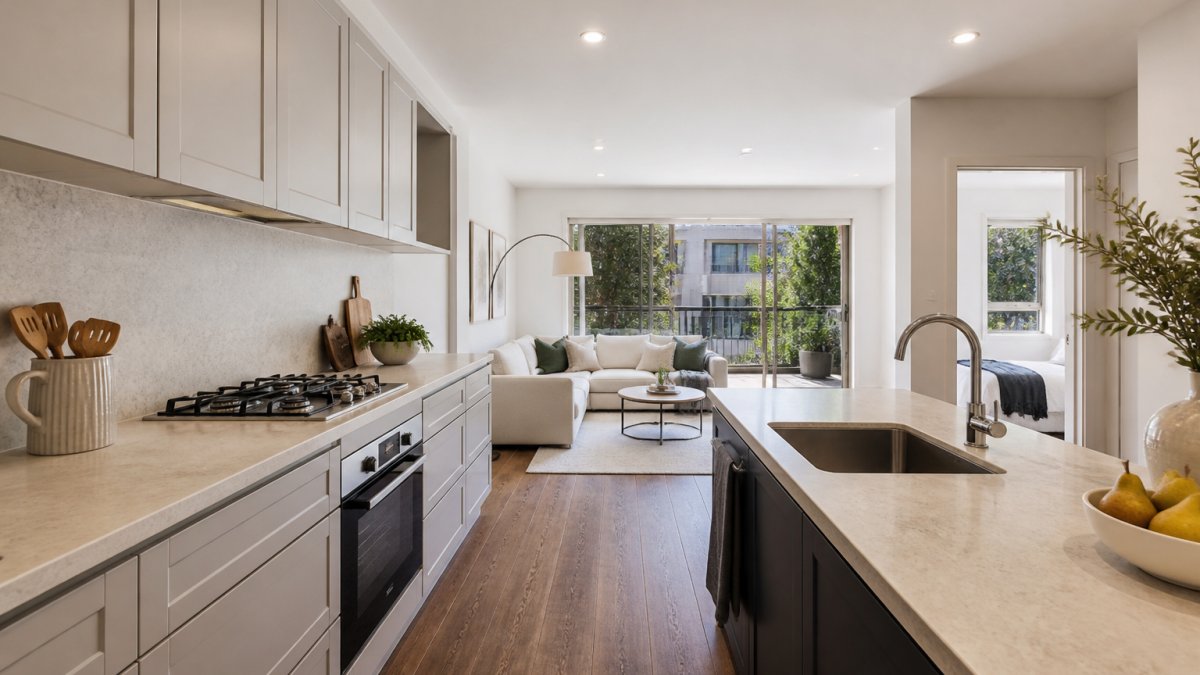
The best renovations for rental properties are the ones tenants notice and pay for: a functional kitchen, a clean and dry bathroom, and a light, well-presented living space. Everything else is decoration.
What Tenants Value vs What Buyers Pay For
Tenants value liveability; buyers pay for presentation and certainty. A tenant cares that the kitchen works, the bathroom is dry, and the apartment is easy to live in. A buyer cares that the apartment photographs well, feels finished, and will not throw up surprises at inspection.
| Renovation | Best For | Impact on Rent | Impact on Resale | Verdict |
|---|---|---|---|---|
| Kitchen upgrade | Both | High | High | Almost always worth it |
| Bathroom renovation | Both | High | High | Worth it if dated or leaking |
| Cosmetic improvements | Rental hold | Moderate | Moderate | Cheap, low-risk win |
| Full reconfiguration | Resale | Low | High | Only with a clear buyer case |
| Overcapitalising on finishes | Neither | Low | Low | Avoid |
Apartment Renovation Approvals: Strata, By-Laws and Common Property
Apartment renovation approvals are the step that trips up most owners, because in a strata building you do not own the walls, floors, or services beyond your lot. Any work touching common property, waterproofing, or building services needs approval before it starts, and the approval pathway depends on what the work actually is.
Strata law in New South Wales draws a practical line between cosmetic work, minor renovations, and major renovations (Strata renovation rules). Cosmetic work such as painting, replacing carpet, or hanging a picture typically needs no approval (Strata renovation rules). Minor renovations such as installing hard flooring, replacing a kitchen, or adding a handrail usually need owners corporation approval by ordinary resolution. Major renovations such as removing a wall, changing the structure, or altering waterproofing typically need a special resolution and sometimes a by-law. The exact classification depends on your building's registered by-laws, not on a generic rule, so read the by-laws before you brief a builder.
- Check the by-laws for what is permitted and what needs a special resolution.
- Confirm whether the work touches common property, including floors, ceilings, and shared services.
- Submit plans and specifications to the owners corporation or strata manager for approval.
- Allow time for approval, because it runs on the owners corporation's schedule, not yours.
- Keep records of approvals, as they matter at sale and if a dispute arises later.
Two apartment-specific risks change the economics more than owners expect. The first is access. In a building with a single lift, a shared lobby, and limited parking, every trade visit, delivery, and waste removal is slower and more expensive than in a freestanding house. A builder who has not priced access and site protection has not priced the job. The second is the age of the building. Older strata blocks can contain asbestos in eaves, wet-area sheeting, or floor coverings, and any disturbance triggers safe removal requirements that add cost and time.
A builder who understands strata coordination will manage this process and protect common areas during the works. Ask how they handle site protection, dust containment, lift and lobby protection, and neighbour communication before you sign anything. Ask, too, whether they have worked in your building or a similar one, because the approval pathway is often faster when the owners corporation has seen the process before.
Tax Treatment for Australian Investment-Property Renovations
Tax treatment depends on whether the work is a repair or a capital improvement, and the difference matters at tax time. Repairs restore the property to its previous condition and are generally deductible in the year they are incurred, while capital improvements form part of the property's cost base and affect capital gains tax on sale.
- Repairs: fixing a leaking tap, patching damaged plaster, or replacing a broken fixture.
- Capital improvements: a new kitchen, a renovated bathroom, or a structural change.
- Depreciation: some capital works and plant may be depreciable over time.
Rules and thresholds change, and the treatment depends on your circumstances. Confirm the position with your accountant and the Australian Taxation Office guidance on rental property deductions before you commit to a scope, because the tax outcome can change whether a project stacks up.
Financing, Cash Flow and Borrowing for Apartment Renovations
Financing a renovation is a cash-flow decision as much as a building decision. The money has to be available before the trades start, and the apartment may generate no rent while the works are underway.
- Confirm how much you can borrow and whether the lender will fund a renovation against the improved value.
- Keep a contingency for variations and hidden defects.
- Budget for lost rent and holding costs during the works.
- Stage the renovation if cash flow is tight, starting with the highest-impact items.
- Use a fixed-price contract so the cost does not move once the scope is agreed.
This is where a documented scope and a fixed-price contract earn their keep. A clear quote, agreed before work starts, is what stops a renovation from turning into a running cost overrun.
Deciding whether to renovate an investment apartment is a numbers game, and the numbers only work when the scope is right. NRC Building Group specialises in high-end apartment renovations in strata-managed buildings, with fixed-price contracts, a documented on-time guarantee, and comprehensive strata coordination and approval management. We limit our project load so every apartment gets the attention it needs. Book a consultation with NRC Building Group and get a documented scope, a fixed price, and a renovation that earns its cost back.
Frequently Asked Questions
Is it worth renovating an investment apartment before renting it out?
It depends on your exit strategy. If you plan to hold long-term, a targeted renovation can lift rental income and reduce vacancy periods. If you plan to sell within a few years, focus on cosmetic improvements that appeal to buyers rather than a full rebuild. Run the numbers first: compare your expected rent increase against the renovation cost and the holding costs while the unit sits empty. A rental appraisal before you commit will give you a realistic figure to work from.
Which renovations add the most value to an investment apartment?
Kitchens and bathrooms consistently deliver the strongest returns because they are the two rooms tenants and buyers inspect most closely. Cosmetic improvements such as fresh paint, updated lighting and new floor coverings are lower cost and lower risk. Maximising natural light and improving the flow between living areas also helps. Avoid overcapitalising on luxury finishes that push your spend past what comparable apartments in the building can support.
How do I calculate whether an investment property renovation is worthwhile?
Start with a rental appraisal to estimate the achievable rent after the work. Multiply the weekly increase by 52 to get annual extra income, then divide the renovation cost by that figure to see your simple payback period. If the payback is longer than your intended holding period, the renovation may not stack up on rental income alone. Factor in potential capital growth at sale, plus any tax deductions you can claim, before making a final call.
What approvals are needed to renovate an apartment?
Most apartment renovations need strata or owners corporation approval before work starts, particularly if you are altering common property, waterproofing, plumbing or structural elements. Check your building's by-laws for restrictions on noise, working hours and contractor access. Some works may also require council approval or a complying development certificate. Getting approvals in writing before you sign a builder's contract avoids delays, disputes and the risk of being ordered to undo work.
Can apartment renovations increase resale value?
They can, but the increase depends on your building, your street and what comparable apartments are selling for. Buyers pay a premium for apartments that present well, and a renovated kitchen or bathroom removes a common objection. The risk is overcapitalising: if you spend more than the market gap between a renovated and unrenovated unit in your building, you will not recover the difference. Check recent comparable sales in your block before committing to a scope.