 ultimate-guide
Preventing Waterproofing Failures in Apartment Renovations
Table of Contents
- Why Waterproofing Failures Happen in Apartment Renovations
- Common Waterproofing Mistakes That Lead to Water Damage
- Apartment Waterproofing Responsibility: Who Pays and Who Approves
- Waterproofing Inspection Checklist for Every Renovation Stage
- How Long Does Bathroom Waterproofing Last?
- Wet Areas, Balconies, and External Risks in Apartment Renovations
- Sequencing, Trade Handoffs, and Quality Control
- Frequently Asked Questions
Last Updated: October 14, 2026
Why Waterproofing Failures Happen in Apartment Renovations
Waterproofing failures in apartment renovations almost always trace back to decisions made before a single tile is laid. In our work at NRC Building Group, we see the same pattern repeatedly: the membrane gets blamed for a problem that started with substrate preparation, sequencing, or a skipped primer coat. Water ingress in strata buildings is rarely a materials fault. It is a process fault.
The Hidden Cost of Water Ingress in Strata Buildings
Water ingress in strata buildings is expensive because it rarely stays in one lot. The Australian Building Codes Board guidance on waterproofing sets out the performance requirements that apply, and non-compliance carries real consequences at handover.
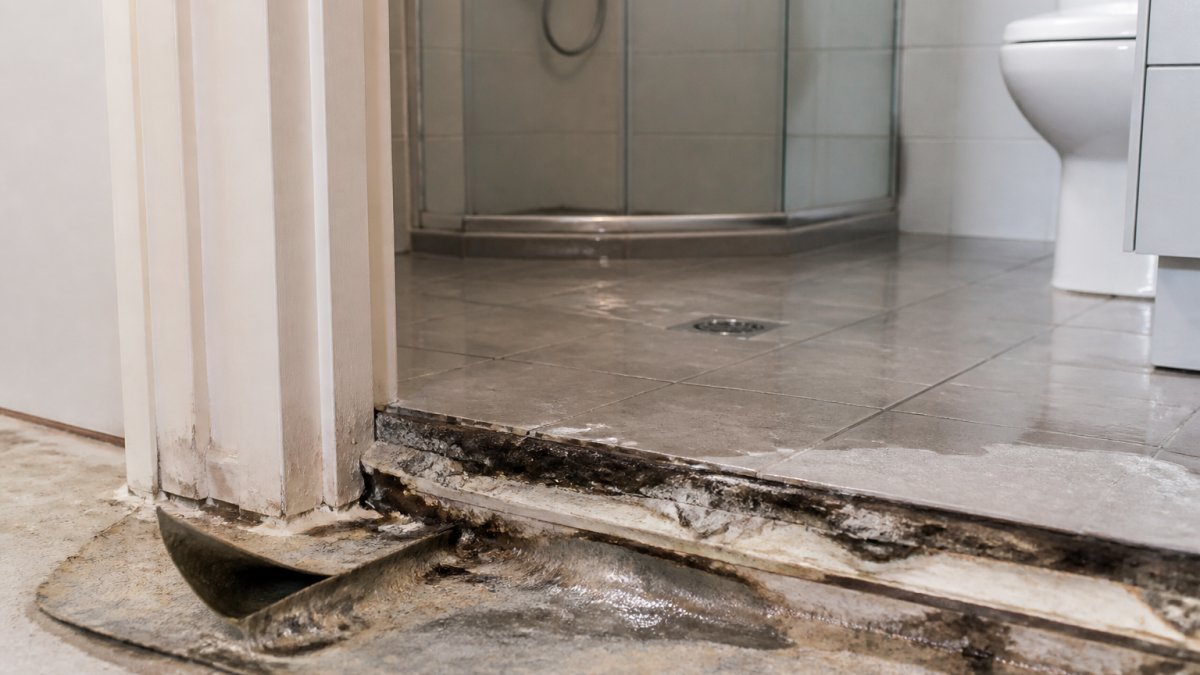
By the time dampness or mould appears on a ceiling two floors down, the original defect is often hidden behind finished tiles. Diagnosis then requires destructive investigation.
Common Waterproofing Mistakes That Lead to Water Damage
Most water damage in renovated apartments comes from a short list of recurring errors, and nearly all of them are avoidable with proper sequencing and supervision. These are the failures that show up again and again in strata buildings.
Poor Surface Preparation and Substrate Defects
Substrate defects are the leading cause of membrane failure. Dust, loose screed, residual adhesive, and surface cracks prevent the membrane from bonding, and an unbonded membrane will eventually delaminate and let water track underneath it. Surface preparation is not a formality. It is the foundation the entire wet area depends on.
Skipped Primer and Incorrect Membrane Application
Primer is not optional, and it is not interchangeable between products. Each membrane system specifies a compatible primer, and skipping it or substituting a different brand breaks the bond. Incorrect application compounds the problem: too-thin coats, missed corners, or membrane laid over a damp substrate all create weak points that fail under building movement.
| Mistake | Why It Fails | The Fix |
|---|---|---|
| Dusty or cracked substrate | Membrane cannot bond | Grind, clean, and fill defects first |
| No primer or wrong primer | Bond breaks at the interface | Use the primer specified for the membrane |
| Single thin coat | Film too thin at stress points | Apply to the specified wet-film thickness |
| Missed corners and penetrations | Water tracks at junctions | Detail corners and penetrations separately |
Apartment Waterproofing Responsibility: Who Pays and Who Approves
Apartment waterproofing responsibility depends on where the work sits: inside your lot, or on common property. In strata schemes, the lot owner is generally responsible for waterproofing within the lot, while the owners corporation is responsible for common property.
Before any wet-area work starts, you need written approval from the owners corporation or strata committee, especially where the work affects common property, structural elements, or shared services.
Waterproofing Inspection Checklist for Every Renovation Stage
A waterproofing inspection checklist only prevents failures if it is tied to hold points, stages where work stops until the previous step is verified and signed off. A flat list of checks is easy to tick and easy to ignore.
Hold Points Through the Renovation Sequence
Waterproofing sits between demolition, plumbing, substrate work, membrane installation, tiling, and fit-off. Each handoff is a point where a defect can be introduced or concealed. The hold points below are the ones that matter most in apartment wet areas.
Hold point 1, After demolition and strip-out
- Confirm the extent of the work and whether any part touches common property or shared services
- Check for pre-existing moisture in the slab or walls before new work begins
- Verify that the existing floor waste and falls are serviceable or scheduled for replacement
Hold point 2, After plumbing rough-in
- Confirm all penetrations, wastes, and tap bodies are set and secure
- Check that the substrate around each penetration is sound and will accept the membrane detail
- Verify that the shower recess, hob, or level threshold is set to the intended finished level
Hold point 3, Before membrane application
- Substrate is clean, dry, and free of dust, loose material, and residual adhesive
- Cracks and defects are filled and cured
- The correct primer for the specified membrane system is applied and fully dry
Hold point 4, After membrane application, before tiling
- Membrane applied to the specified wet-film thickness, including corners and upstands
- All penetrations and junctions detailed and reinforced
- Curing completed in accordance with the product data sheet
Hold point 5, After tiling and before fit-off
- Confirm no membrane was punctured or scuffed during tiling
- Check falls to the floor waste are intact and water sheds correctly
- Confirm sealant is applied to the correct joints and not used as a substitute for waterproofing
Documentation and Compliance Certificates at Handover
Compliance certificates are your proof that the work meets the relevant standard, and in strata buildings they matter for insurance and future resale. Retain the waterproofing certificate, product data sheets, flood-test records, and dated photographs of each hold point. Without them, a future leak becomes your word against the next owner's.
When to Bring In Independent Testing
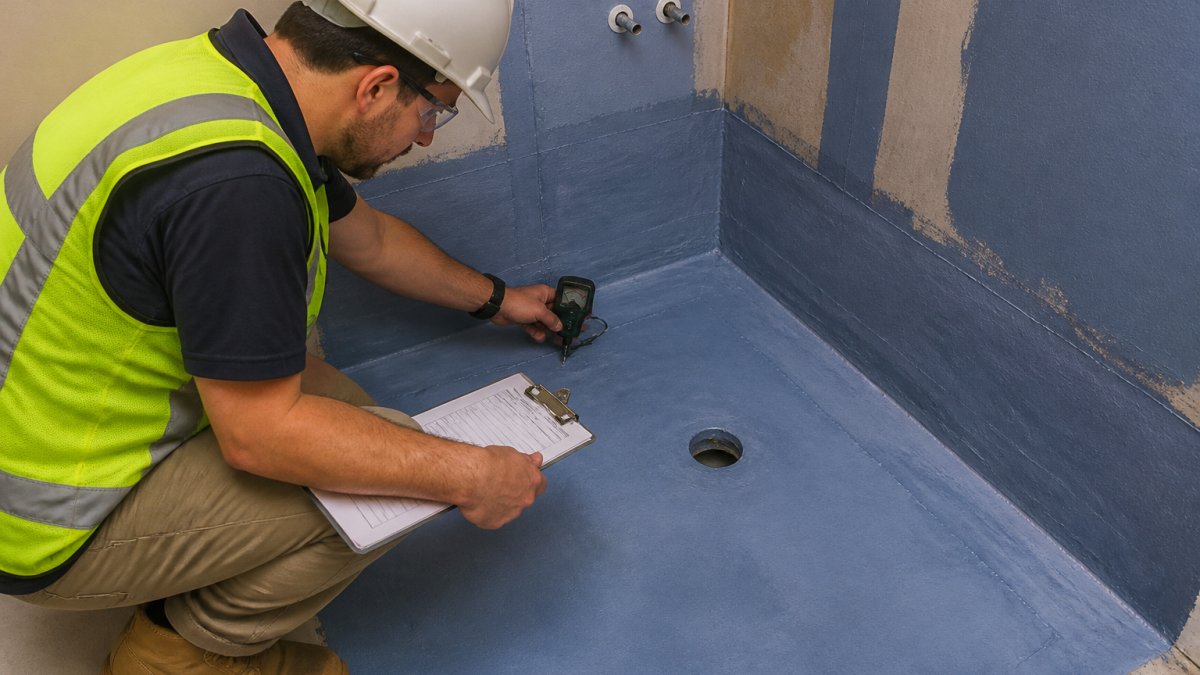
Independent inspection is most valuable at two moments: before the membrane is covered, and at handover. An independent inspector can verify membrane thickness, detail reinforcement, and flood-test results, and can provide a written report that stands apart from the installer's own assurance.
When commissioning independent testing, ask for:
- A written report identifying the areas inspected and the method used
- Photographic evidence of each hold point, dated
- Confirmation of the membrane system, primer, and detail materials used
Retain these records with the compliance certificate and product data sheets. In a strata building, they are also useful evidence if a dispute arises over responsibility for a leak that crosses lot boundaries.
Coordination Across Lots and Common Property
In an apartment renovation, waterproofing work rarely stays inside one lot. Access, approvals, and notifications often need to be coordinated with the owners corporation and with neighbouring owners. Before work starts, confirm:
- Whether any part of the work affects common property, structural elements, or shared services
- What written approval is required, and from whom
- What notice neighbouring owners are entitled to receive
Getting this coordination right before the membrane goes down is what separates a renovation that proceeds smoothly from one that ends in a stop-work order or a dispute over liability.
How Long Does Bathroom Waterproofing Last?
Bathroom waterproofing lifespan is not a single number. It is the product of three variables: the membrane class, the quality of installation, and the maintenance regime applied to the finished wet area. A correctly installed and certified membrane in a residential wet area is commonly expected to serve for the life of the tiling cycle, but that expectation only holds when the substrate, primer, membrane thickness, and flood test all meet the relevant standard.
What Actually Determines Service Life
Membrane systems fall into broad classes, and each behaves differently under the conditions found in apartment wet areas:
- Liquid-applied membranes cure to a seamless film and are typically specified for bathrooms, laundries, and balconies. Their service life depends heavily on achieving the specified wet-film thickness in every coat, because thin spots at corners and penetrations are where failure begins.
- Sheet membranes are factory-controlled for thickness and are often used where movement is expected, such as around floor wastes and at junctions between different substrates. Their performance depends on the bond at laps and terminations.
- Cementitious membranes are rigid and can crack under building movement unless movement joints and reinforcing are detailed correctly.
A common pattern is that failures attributed to "old membrane" are actually failures of a detail that was never reinforced, a corner, a penetration, or a junction between the floor and wall.
The Maintenance Items That Shorten Lifespan
Grout and silicone sealant are not waterproofing. They are maintenance items, and once they degrade, water reaches the membrane. What shortens service life in practice:
- Ponding water from inadequate fall to the floor waste, which keeps the membrane under continuous load
- Building movement opening joints at wall-to-floor junctions and around penetrations
- Sealant deterioration that is not renewed before it fails
Replacing degraded sealant on a routine cycle is far cheaper than repairing the water damage it causes. The same logic applies to clearing balcony and floor-waste drainage before the wet season.
Warranty Versus Realistic Expectation
Product warranties cover the membrane material, not the installation. A manufacturer will typically require evidence that the system was applied by an approved applicator, to the specified thickness, over a correctly prepared substrate, with the specified primer, and that a flood test was completed.
This is why the compliance certificate matters more than the product label. It is the record that ties the installed system to the standard it was required to meet, and it is what an insurer, a prospective purchaser, or an owners corporation will ask for when a leak appears years later.
Wet Areas, Balconies, and External Risks in Apartment Renovations
Wet areas, balconies, and external areas carry different risks and different requirements. Bathrooms and laundries are governed by the wet-area waterproofing provisions of AS 3740, the Australian Standard for waterproofing of domestic wet areas.
Balcony waterproofing failures often stem from blocked drains, failed falls, or movement at the junction between the balcony and the internal floor. In apartment renovations, those junctions frequently sit on or near common property, which brings the owners corporation back into the approval chain.
Sequencing, Trade Handoffs, and Quality Control
Sequencing is where good waterproofing is won or lost. The membrane must be complete, cured, and tested before the tiler arrives, and the tiler must not puncture or scuff it during installation.
Quality control means someone owns that handoff. On our projects, we schedule a documented inspection at each transition, so the waterproofing is signed off before the next trade starts.
Waterproofing failures in apartment renovations are preventable, but prevention depends on discipline at every stage, from substrate preparation to the final compliance certificate. Our on-time guarantee pays $1,000 for every week of delay within our control, backed by a 6-year structural and 2-year cosmetic warranty. Book a consultation and let us manage the waterproofing details so you never have to.
Frequently Asked Questions
Is failed waterproofing a structural defect?
Failed waterproofing is not typically classified as a structural defect under NSW strata law. Structural defects affect the building's load-bearing elements, while waterproofing defects are usually deemed non-structural. However, water ingress can cause structural damage over time if left untreated. In apartment renovations, waterproofing failures often fall outside statutory warranty periods for structural items, which is why documentation and compliance certificates at handover matter so much for owners.
How many years does bathroom waterproofing last?
The lifespan of a correctly installed waterproofing membrane in an apartment bathroom can vary significantly. It depends on factors such as membrane quality, substrate preparation, curing time, and whether the wet area meets AS 3740 requirements. Skipping primer or applying membrane over damp substrates can significantly shorten its effective service life.
What are the most common waterproofing mistakes in apartment renovations?
The most frequent mistakes include poor surface preparation, missing or incorrect primer, membrane applied over wet or dusty substrates, insufficient coverage at joints and penetrations, and no fall to drain. In apartments, additional risks come from building movement between lots, shared walls, and trades walking on uncured membrane. Skipping a flood test before tiling is another common error that hides problems until water damage appears months later.
Who is responsible for waterproofing repairs in an apartment building?
Responsibility depends on where the failure occurs. Waterproofing inside a lot, such as a bathroom, is usually the lot owner's responsibility. Waterproofing on common property, including balconies, roofs, and shared wet areas, falls to the owners corporation. Under strata schemes legislation, the owners corporation must maintain and repair common property. For apartment renovations, owners should confirm boundaries with their strata manager before work begins to avoid disputes over apartment waterproofing responsibility.
How do you check that bathroom waterproofing has been installed correctly?
Use a waterproofing inspection checklist at three stages: before membrane application, after curing, and before tiling. Check substrate moisture levels, confirm primer coverage, verify membrane thickness and bond, inspect joints, corners, and penetrations for reinforcement, and confirm falls to drain. A flood test held for at least 24 hours is the most reliable way to detect leaks before finishes conceal the membrane. Photograph each stage and retain compliance certificates.
What should be included in waterproofing documentation at handover?
Handover documentation should include the waterproofing compliance certificate, membrane product data sheets, applicator licence details, flood test records with dates and results, and photographs of each stage before tiling. For apartment renovations, also keep strata approval records and any correspondence about common property. This documentation supports warranty claims and helps future trades avoid penetrating the membrane during later work.
How can you tell if bathroom waterproofing has failed?
Warning signs include dampness or musty odours in adjacent rooms, mould on skirting boards or grout, bubbling paint, loose tiles, and water stains on ceilings below. In apartments, a neighbour reporting a leak is often the first indication. Cracks in grout or silicone sealant around wet areas can allow water ingress even when the membrane is intact. Early diagnosis by location and symptom helps determine whether the issue is a surface defect or a full membrane failure.